bloom
Year
‘26
Duration
20 weeks
Master thesis
Pierre
Collaboration
Logitech

A haptic literacy toolbox for children with dyslexia

For some children, having an idea is easy. Getting it onto paper takes much more effort.
What is Dyslexia?
Dyslexia is a neurobiological learning difference that primarily affects how the brain processes written and spoken language, defined by unexpected underachievement
For those Reading and writing can require extra effort, leaving less mental capacity for understanding and expressing ideas.
0%

of people experience traits associated with dyslexia. It exists on a spectrum, so the challenges and strengths can look very different from one person to another.
Source: Analysis of the impact of visual impairment

children and teenagers aged 6–19 across the EU are estimated to experience reading and spelling difficulties associated with dyslexia.
Source: EU education statistics (Eurostat 2023/2024).
Where do people with dyslexia struggle?
Reading and writing depend on several interconnected skills. For children with dyslexia, some of these skills can be particularly difficult to develop and automate.


A crucial window
The first years of school are crucial for developing reading and writing skills. That’s why I focused on children aged 6–9, when early intervention can help prevent learning gaps from widening.

56%–92%
of at-risk beginning readers reached average reading ability following intensive early intervention, with outcomes varying across studies
Source: Sanfilippo et al., 2020. Range reported across studies.
Insights from the experts
To better understand the challenges beyond the literature, I spoke with children, therapists, teachers and researchers.

“Some kids love added visuals. Others find them very distracting.”
Julia, Speech language therapist
“Using a multisensory approach helps children build deeper connections between what they see, hear and do.”
Maria, Professor in Language Teaching and Learning at Umeå University
"There is no single intervention that works for all, every child is different.”
Fivian, Speech language therapist at special school

Research into tactile and haptic feedback
Research into tactile and haptic feedback suggested interesting possibilities for supporting attention, rhythm and letter–sound learning.
But more feedback isn't necessarily better. The challenge is to make tactile cues meaningful without adding unnecessary cognitive load.

→ These findings led to the idea of a haptic literacy toolbox, combining structured learning with adaptive guidance and tactile feedback.
Bloom
Bloom integrates into everyday classroom learning, combining structured literacy exercises with tactile guidance. Children can practise at their own pace while learning alongside their classmates.


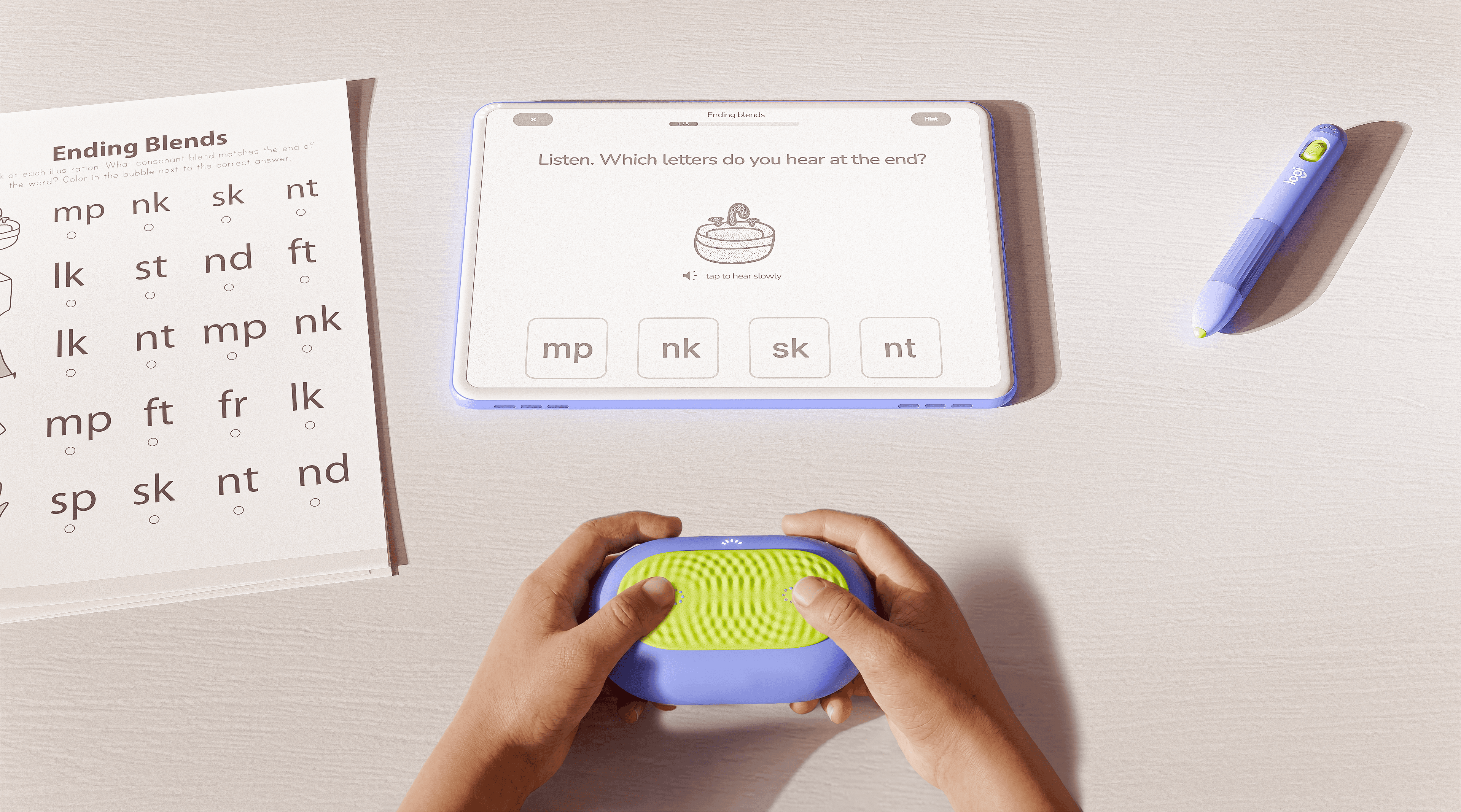
Bloom Cue is designed to fit naturally into children's hands. Its rounded form and textured surface encourage intuitive interaction, making touch a central part of the learning experience.


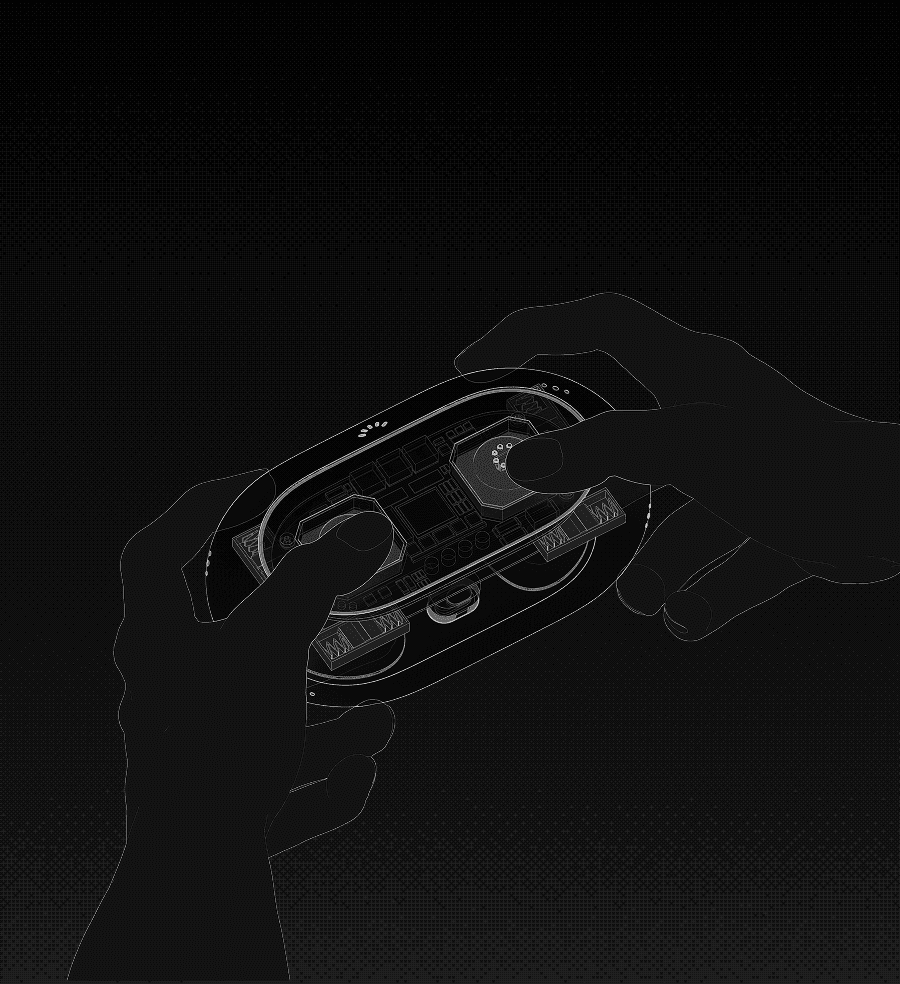
Inside Bloom Cue, four haptic actuators are positioned along different axes. By activating them individually or in sequence, they can create distinct vibration patterns and the sensation of movement across the hand.

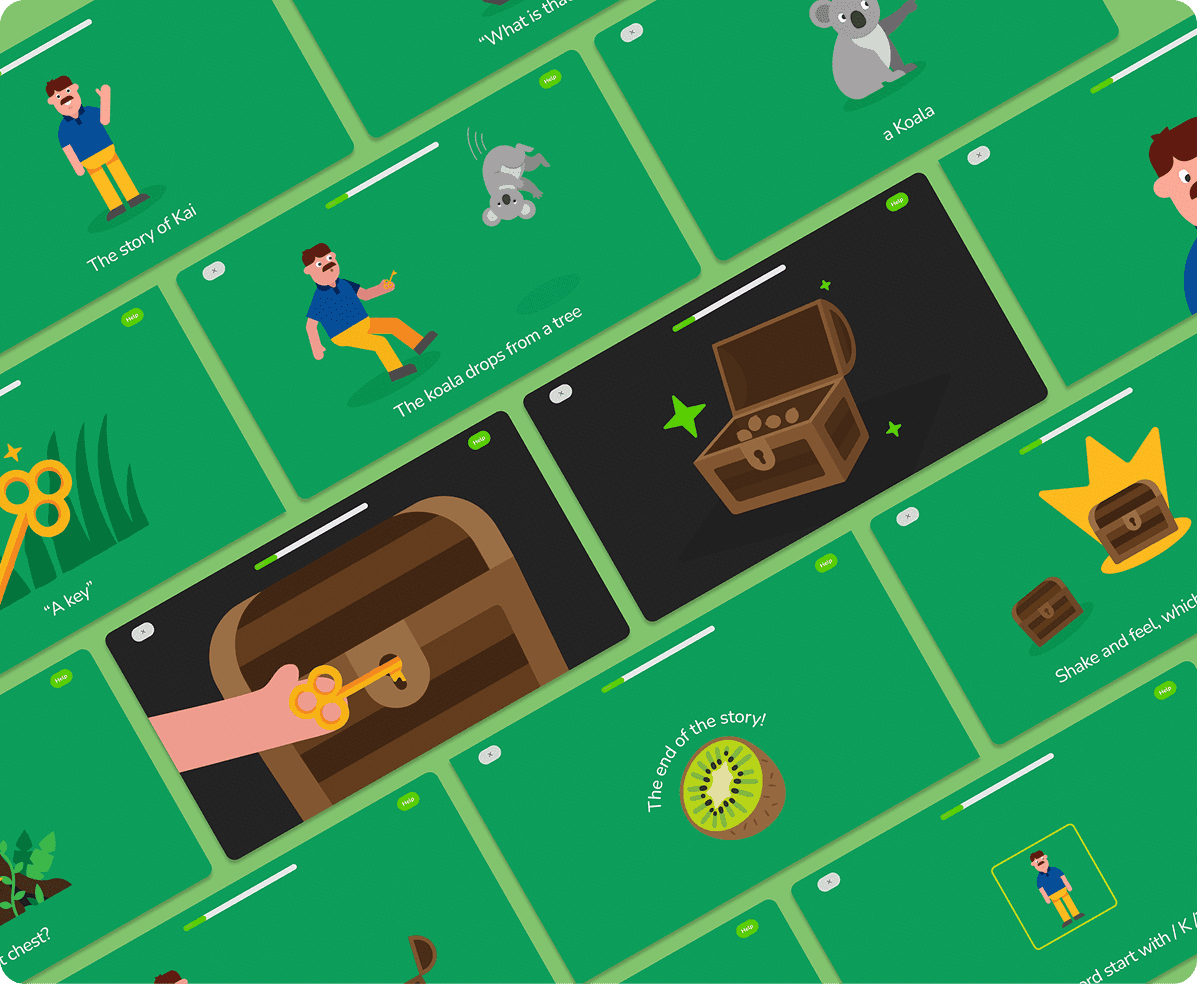
During therapy, Bloom combines guided exercises with interactive storytelling. The larger screen brings stories to life, while Bloom Slate provides a focused workspace for learning alongside the therapist.


Bloom Crayon features three interchangeable tips, each designed for a different way of practising writing. From guided letter formation to freehand writing and air-writing, the Crayon adapts to different learning needs.


At home, Bloom supports independent learning and creativity. Through Expression Mode, children can bring their ideas to life by writing, drawing or dictating stories.


Bloom Crayon lets children adjust haptic feedback or use its built-in microphone to quietly ask questions and receive guidance through Active Assistance Mode.


Over 20 weeks, Bloom took shape through research, user testing, hands-on prototyping and continuous iteration. From early haptic experiments to refined physical models, each step helped shape the final design.


