LifeLine
Year
'25
Duration
10 weeks
Group project
Nicolò, Pierre
Collaboration
Laerdal Medical

The Future of Emergency Cardiac Care


Our problem statement
How might we help paramedics improve survival outcomes in cardiac arrest cases?
Background
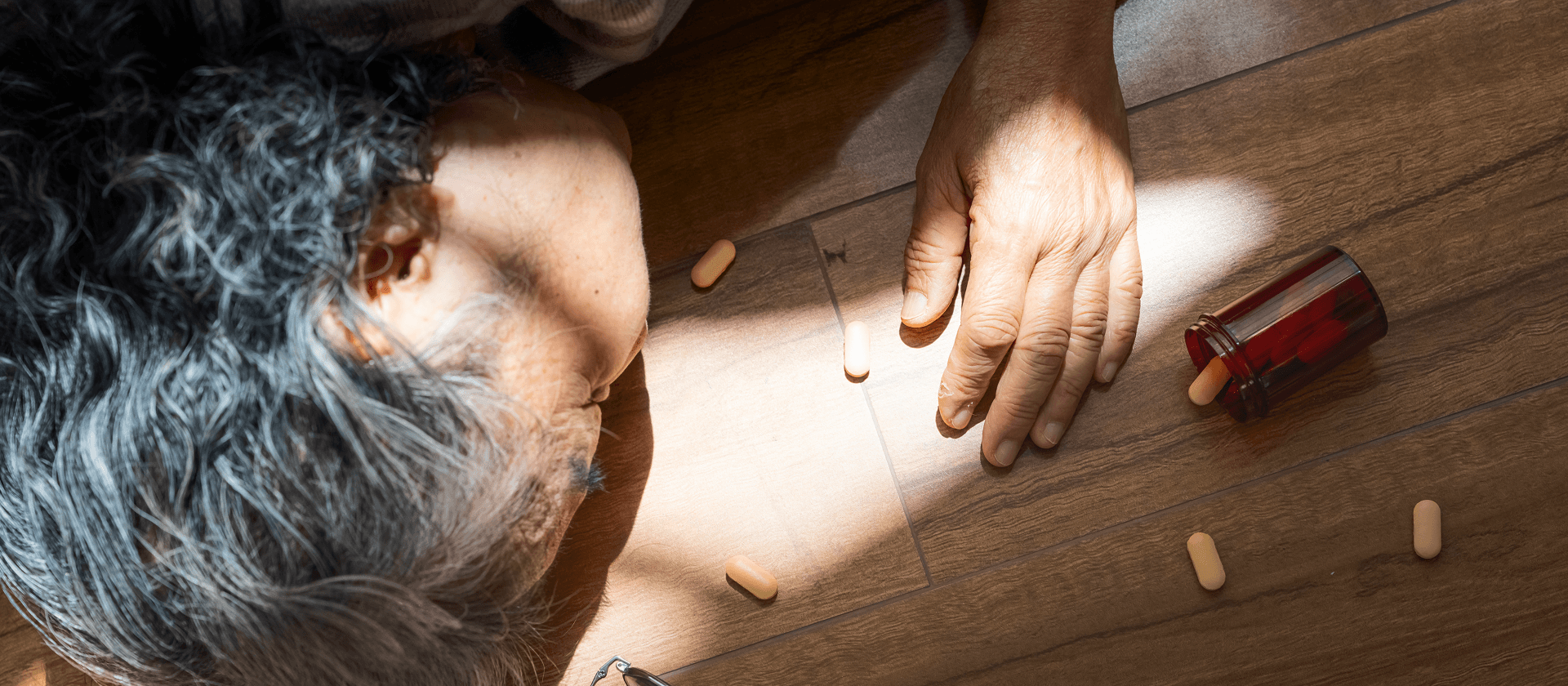
Out-of-hospital cardiac arrest is a highly time-critical emergency requiring continuous CPR and rapid defibrillation. Paramedics must manage multiple devices in cramped, chaotic environments where even brief, hands-off interruptions during setup can destroy vital perfusion pressure and result in a fatal outcome.
Cardiac arrest claims ~436,000 U.S. lives annually. Survival outside hospitals depends entirely on how quickly first responders establish a lifesaving rhythm.
Survival remains at just 9%. Success hinges on uninterrupted, high-quality CPR and rapid defibrillation. Every pause closes the window for a lifesaving shock.
Source: AHA / CARES
Source: CARES / AHA
Cardiac Arrest
Chain of Survival
Out-of-hospital cardiac arrest requires a seamless response. Bystanders initiate the crucial first steps to buy time, allowing arriving paramedics to deploy the advanced tools and training necessary to restart the heart.
Field research and exploration
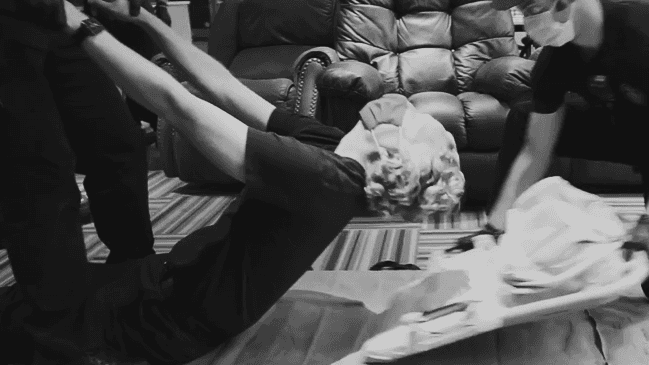
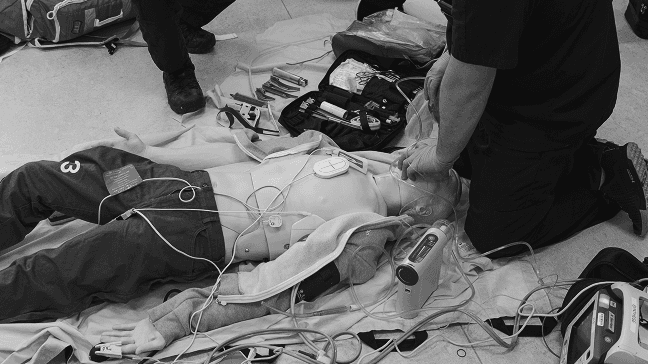
In collaboration with Laerdal Medical, we explored how cardiac arrest care unfolds in the field and where current equipment creates critical delays. Through field research and training sessions with paramedics in Umeå, Sweden, we studied movement, coordination, and treatment flow to identify the moments where time is lost, care is interrupted, and advanced interventions like DSED become difficult to perform.
Why Double Sequential External Defibrillation is a breakthrough
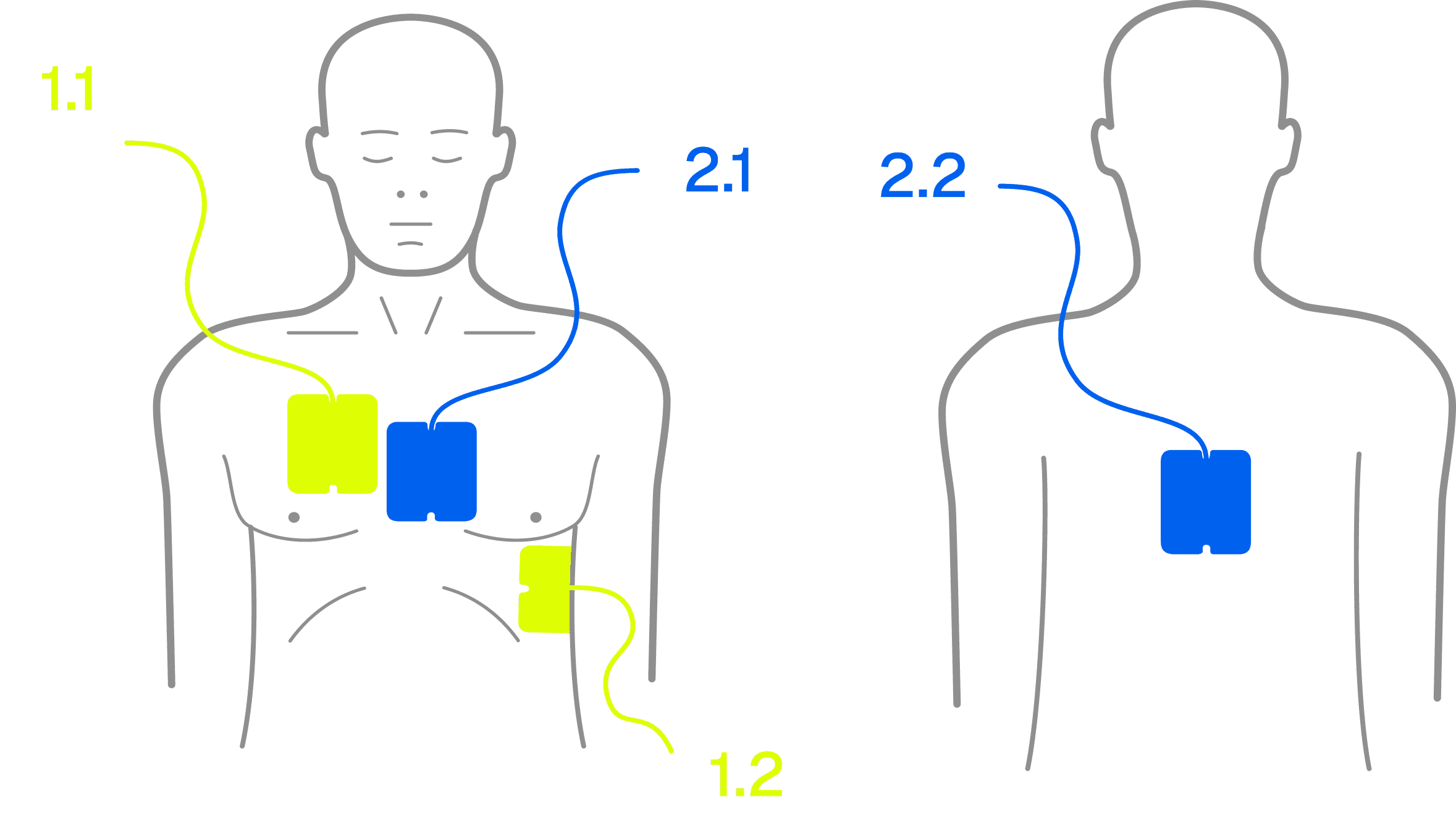
DSED uses a second set of pads to deliver two rapid shocks in sequence.
Source: DOSE VF Trial (2022)
Improved survival in a major clinical trial vs. standard defibrillation.
Source: DOSE VF Trial (2022)
"We are aware of the latest DSED evidence, but accessing the back and chest with current equipment is practically impossible without critical delays that compromise the patient's outcome."
Paramedic Umeå, Sweden
Key challenges of DSED from user interviews
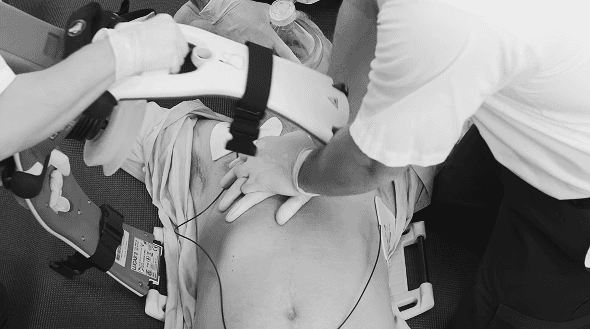
01 Sternum blocked
02 Patient repositioning
03 Cable complexity
Mechanical CPR devices occupy a massive portion of the chest cavity. This physical barrier blocks paramedics from placing a second set of pads in the optimal position without interrupting ongoing care.
Effective DSED often requires placing pads on both the front and back of the body. Rolling a heavy, unresponsive patient to access their back forces a critical and dangerous pause in chest compressions.
Resuscitations frequently happen in cramped and unpredictable environments. Introducing a second defibrillator doubles the thick cables, creating a hazardous tangle that can snag equipment and slow down the team.
LifeLine brings DSED into a single resuscitation workflow, helping paramedics reduce interruptions and act faster in the moments that matter most.
LifeLine
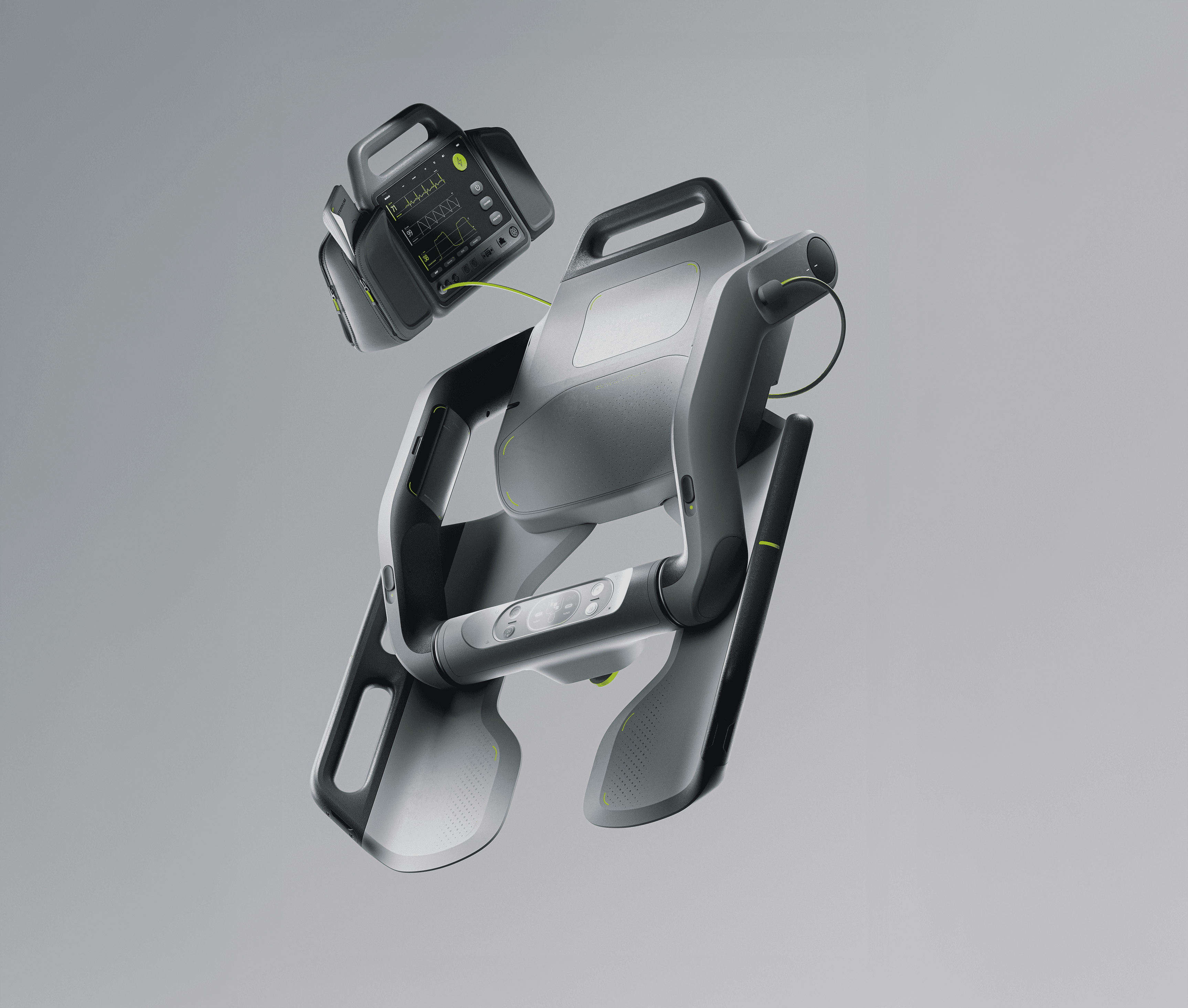
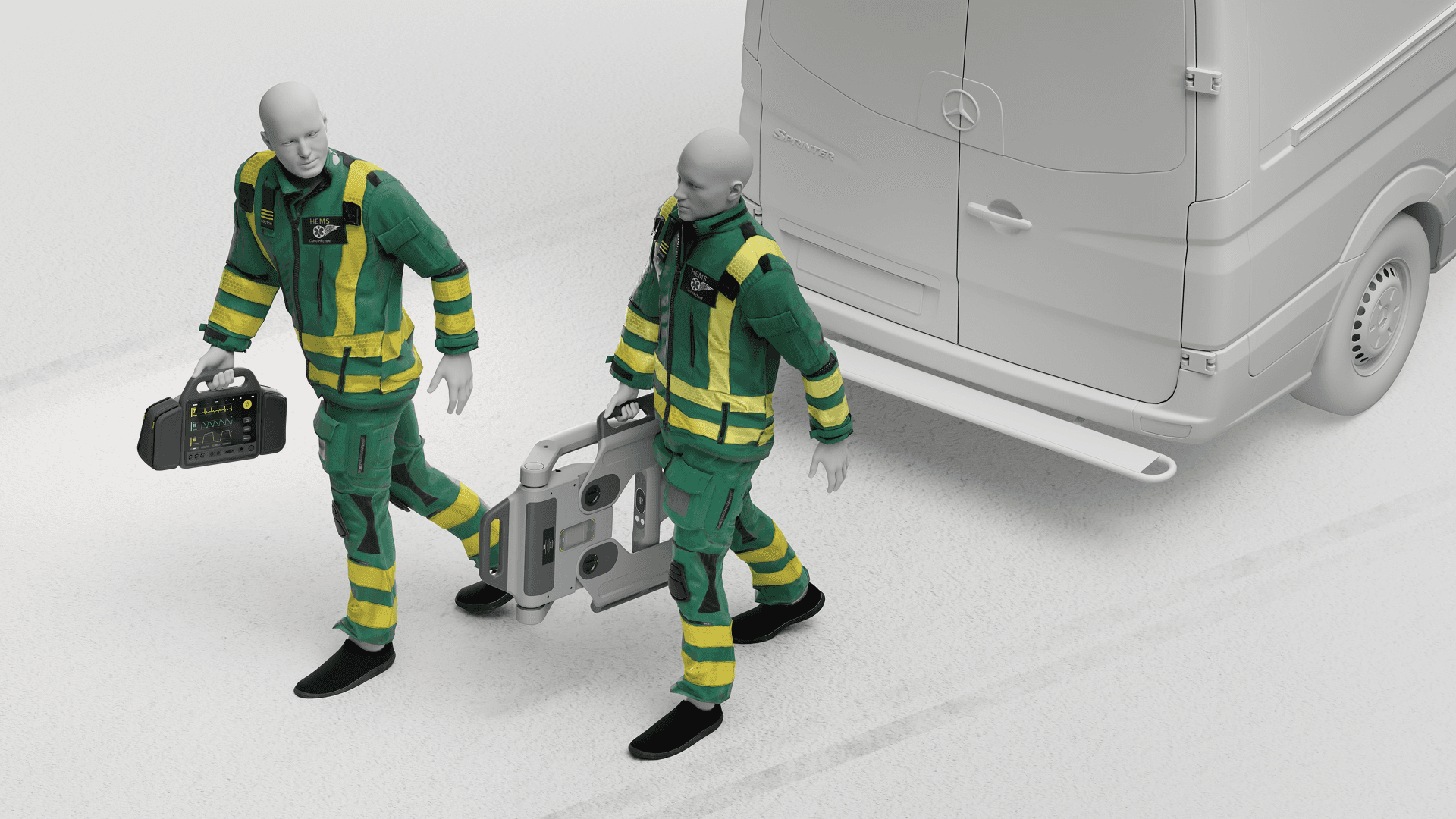
LifeLine’s wrap-around compression arm enables a rapid transition from manual to automated CPR, reducing setup time and helping preserve critical perfusion pressure.
By integrating defibrillation directly into the system, LifeLine makes DSED more practical in emergency care, reducing complexity, improving access, and supporting faster shock delivery.
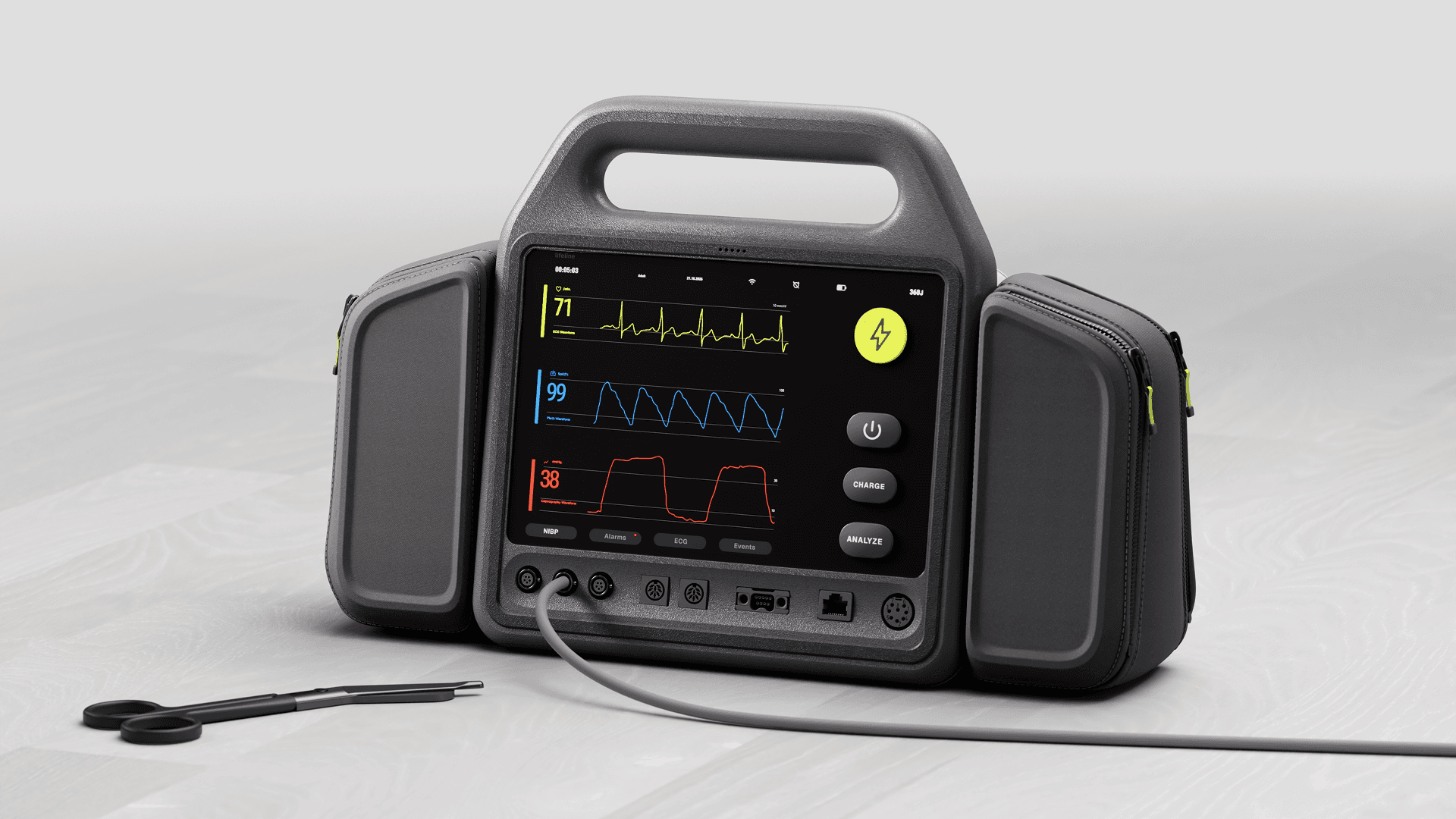
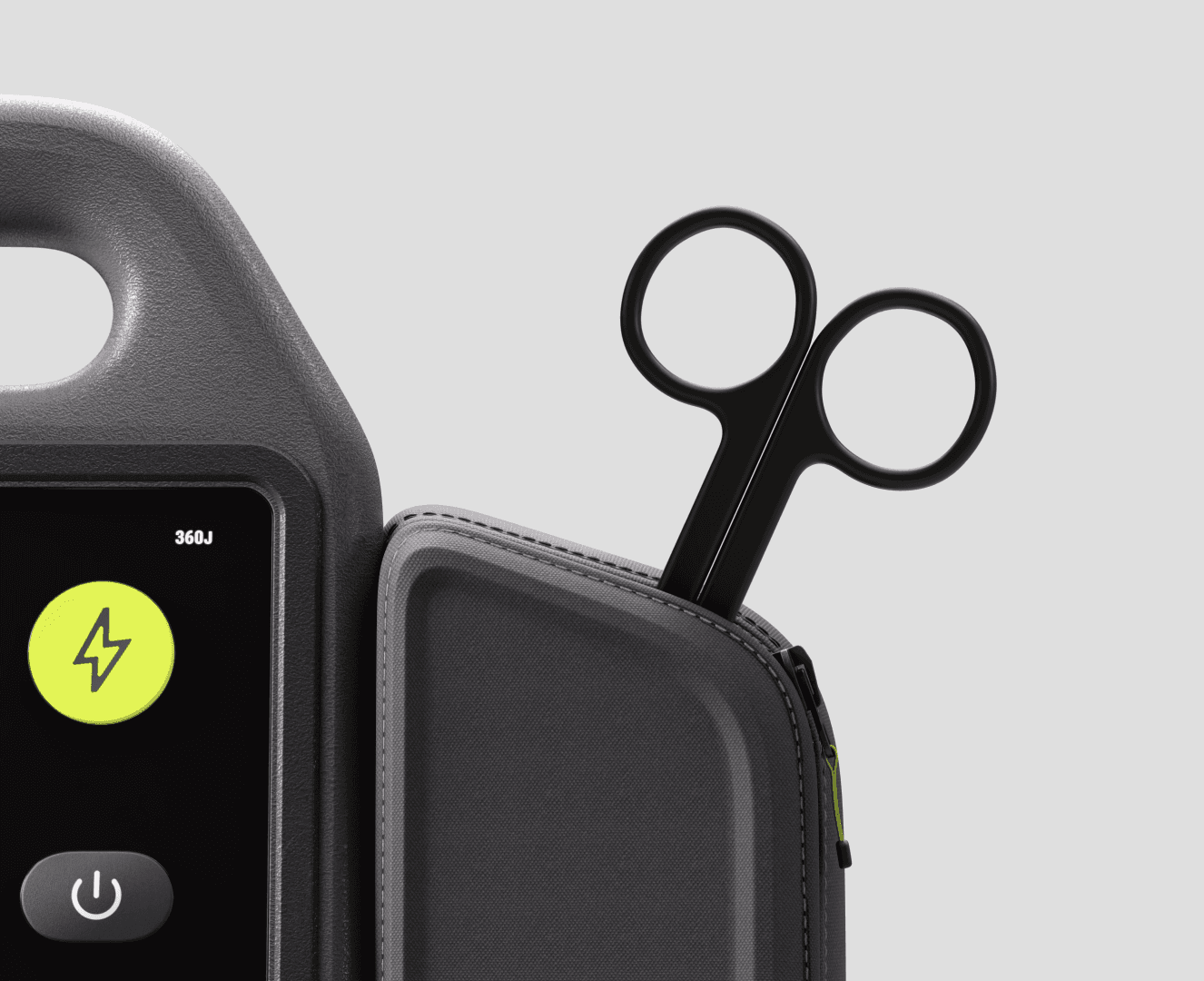
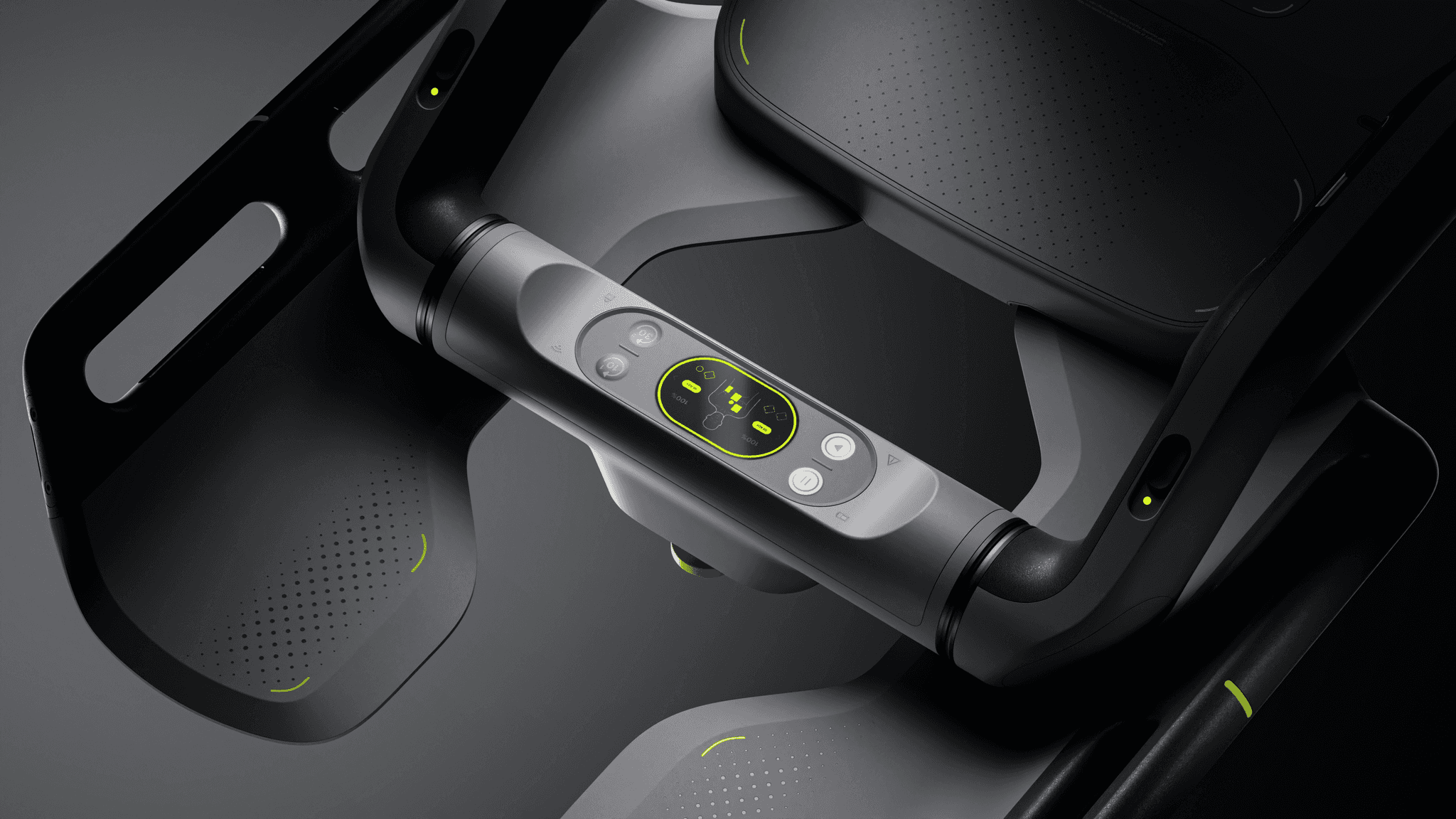
Designed around the patient, the interface places critical information at the center of action, helping medics maintain attention where it matters most.
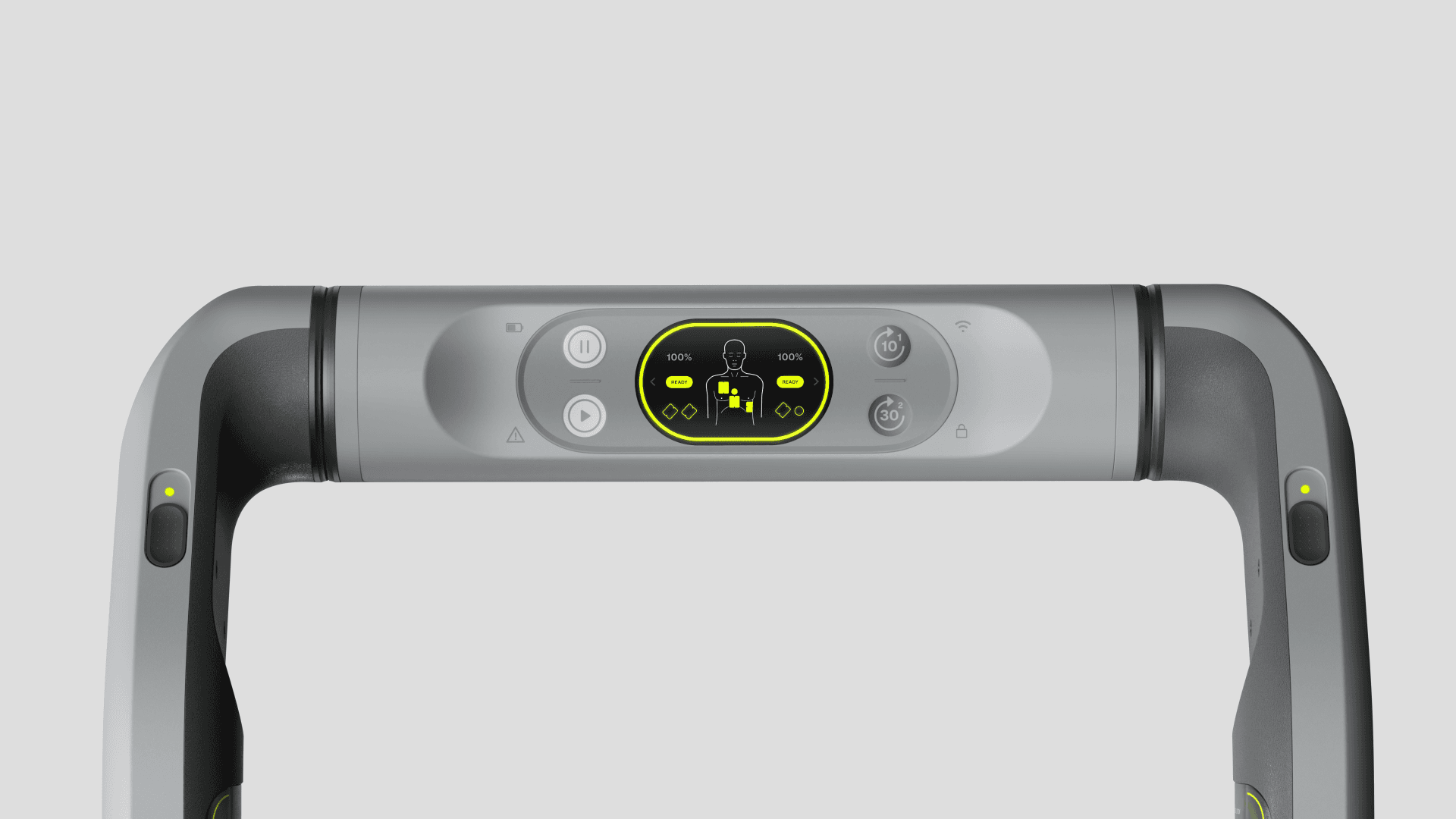
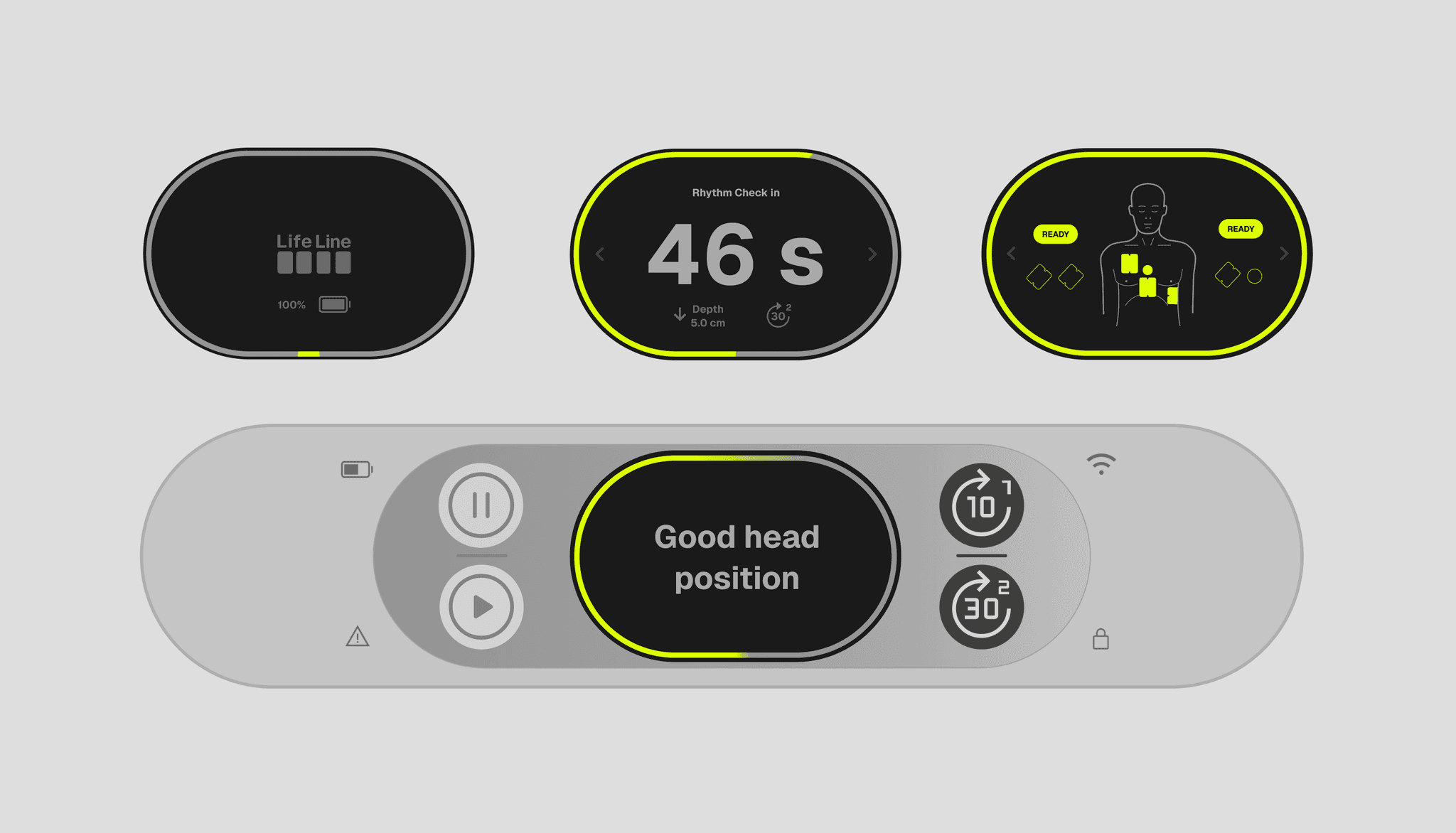
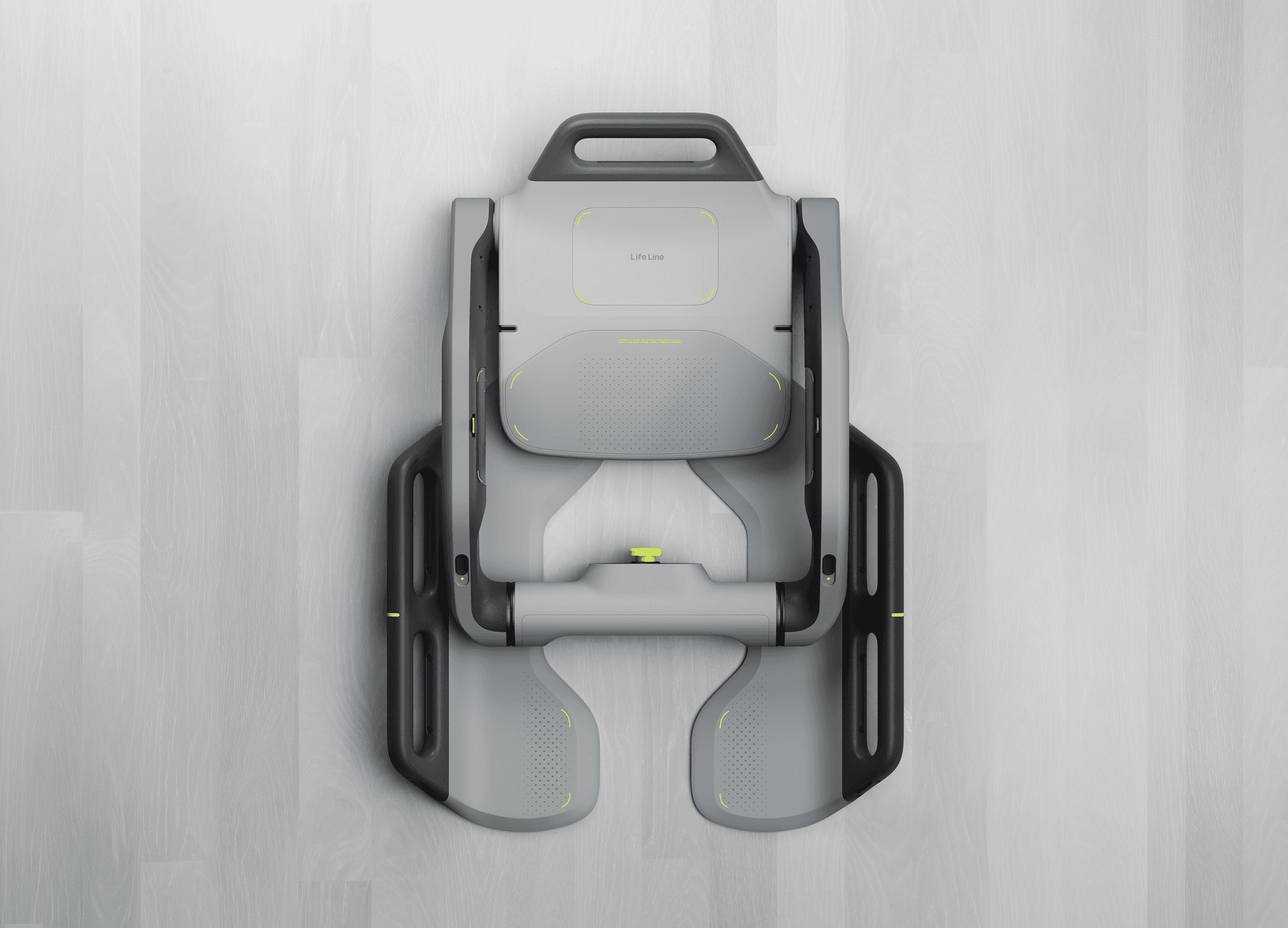
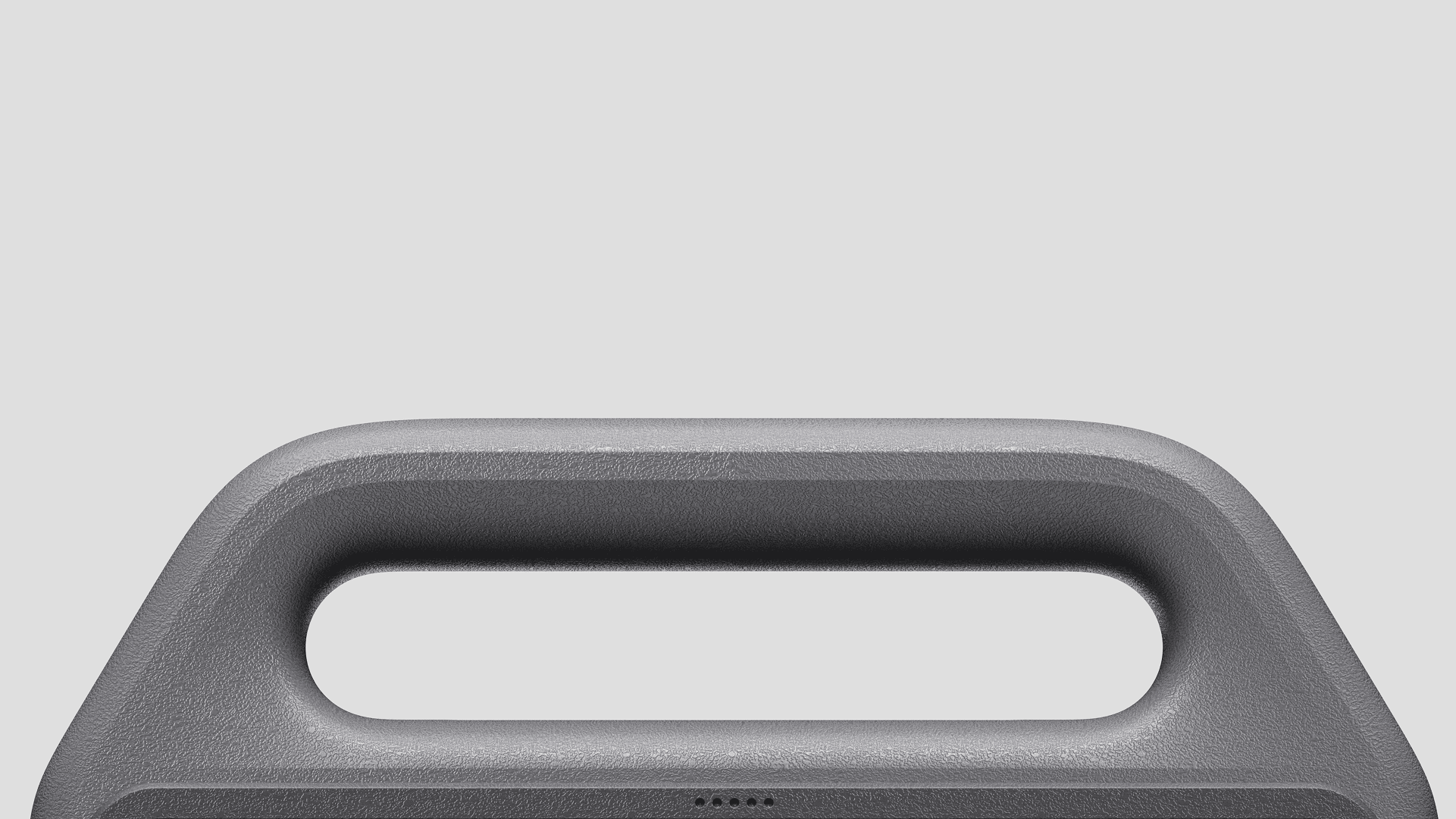
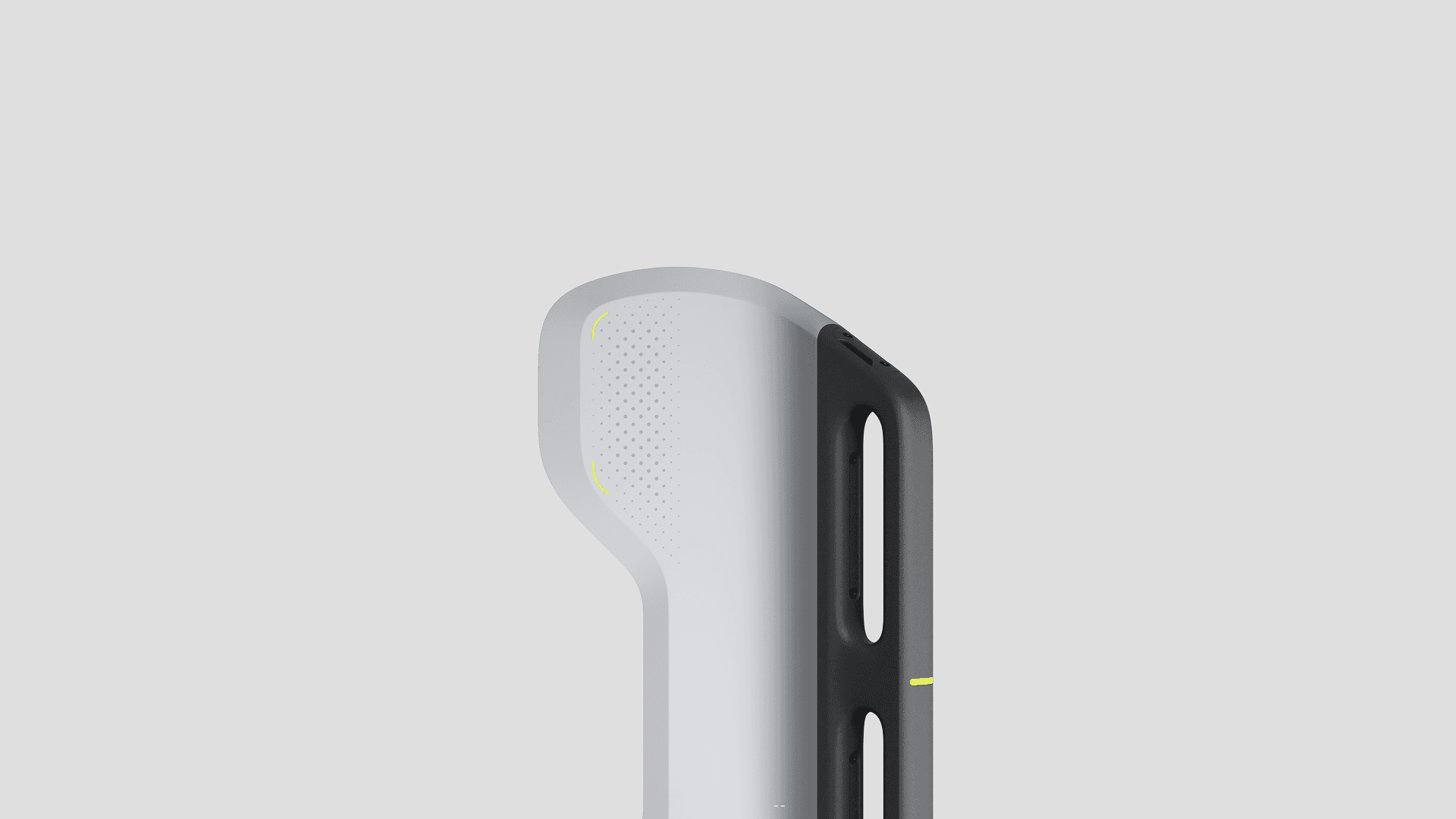
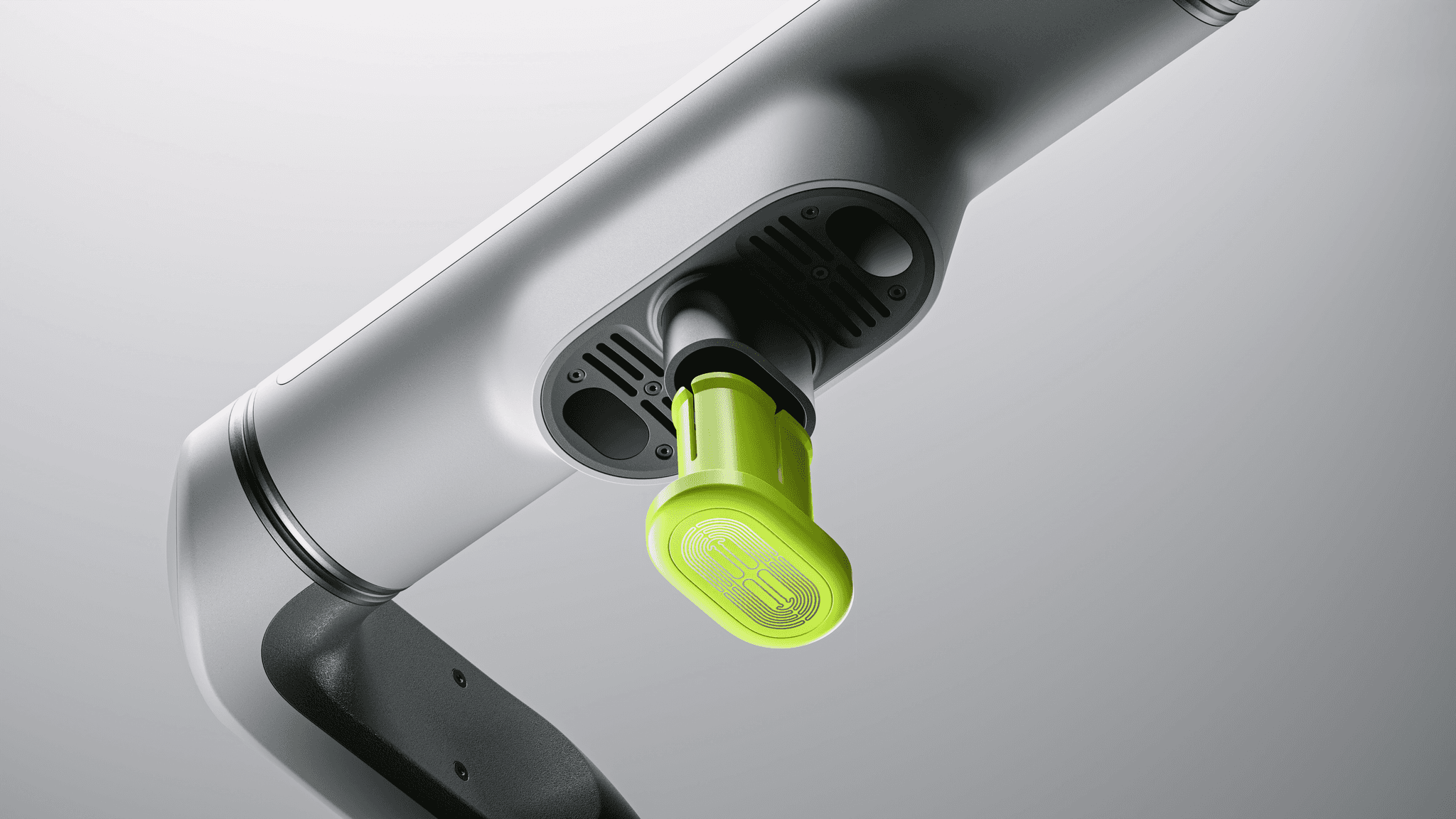
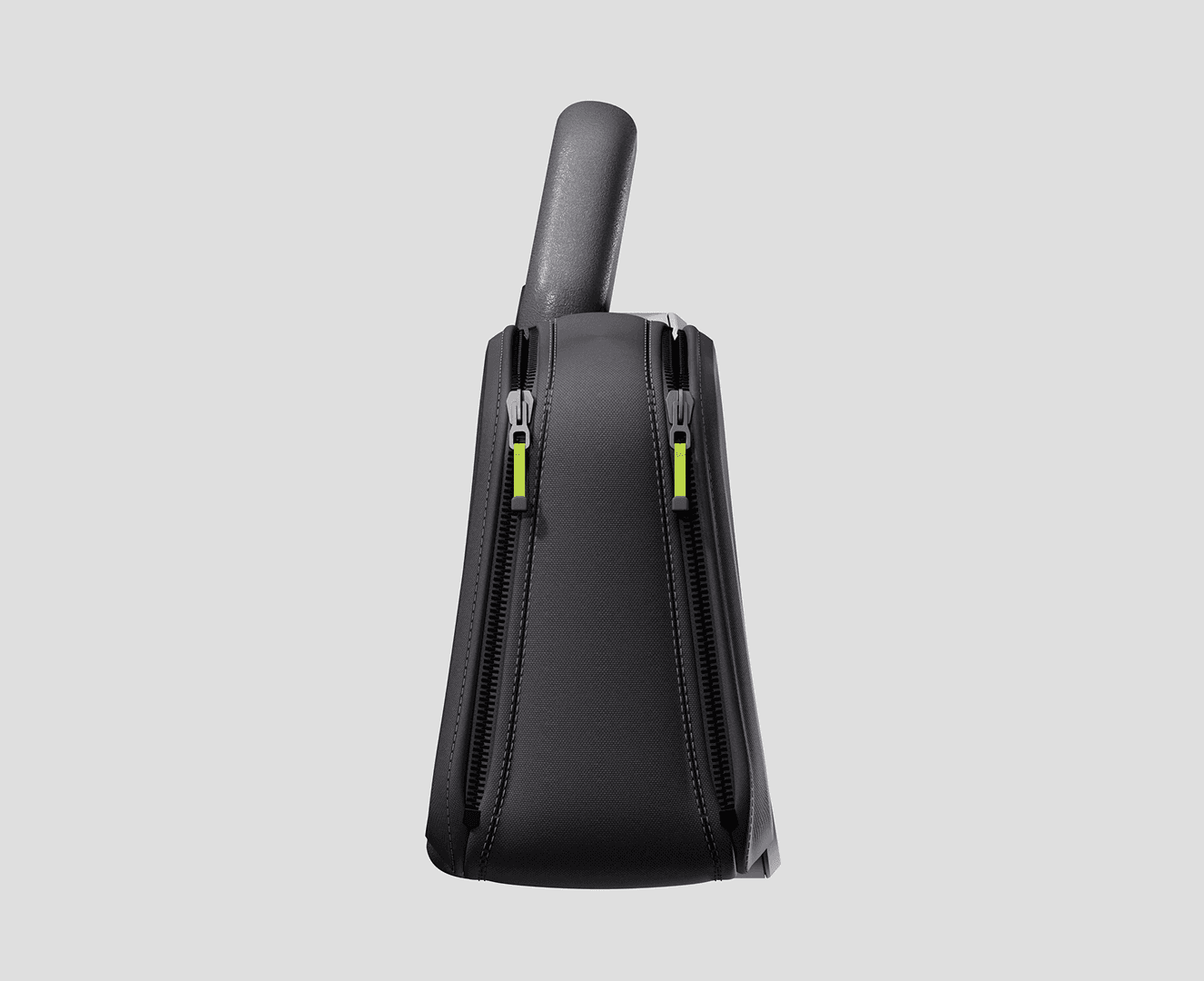
Built for demanding emergency environments, LifeLine uses durable, easy-to-clean surfaces with high-visibility accents that make controls and touchpoints immediately readable.
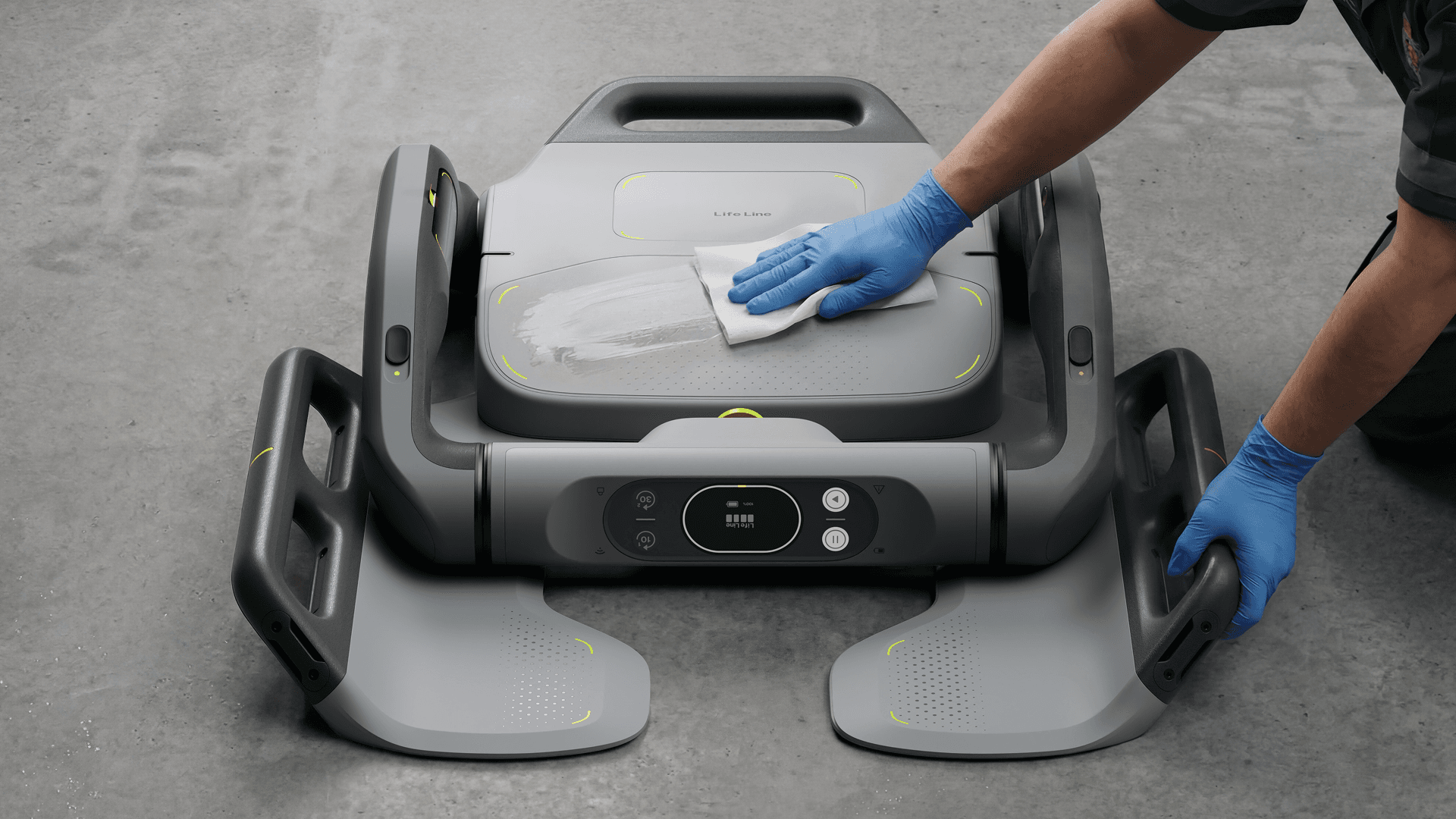
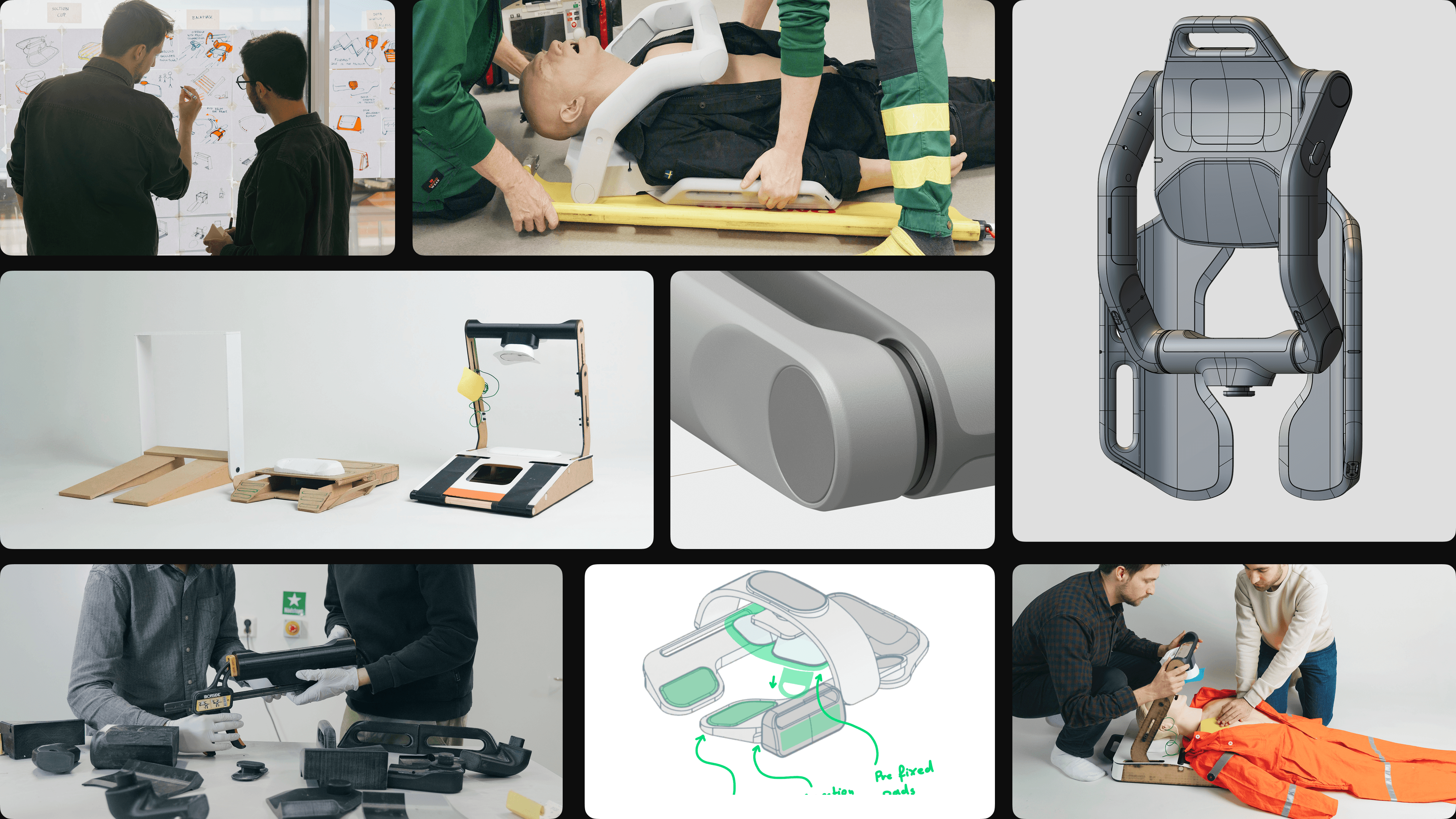
Prototyping exposed key delays in conventional setup, leading to the wrap-around arm concept. We then built full-scale 1:1 models to test the device with paramedics, while repeated manikin testing helped refine the fit across a wide range of patient sizes.